Spot the Scam: Proven Ways to Detect Fake Receipt Instantly
Detecting a fake receipt has become a critical skill for businesses, insurers, and individuals who process digital expenses. Modern fraudsters use sophisticated tools to alter PDFs and images, but equally advanced systems now analyze documents at scale. About: Upload — Drag and drop your PDF or image, or select it manually from your device via the dashboard. You can also connect to our API or document processing pipeline through Dropbox, Google Drive, Amazon S3, or Microsoft OneDrive. Verify in Seconds — Our system instantly analyzes the document using advanced AI to detect fraud. It examines metadata, text structure, embedded signatures, and potential manipulation. Get Results — Receive a detailed report on the document's authenticity—directly in the dashboard or via webhook. See exactly what was checked and why, with full transparency. Learning to spot telltale signs and using automated verification together creates a powerful defense against falsified receipts.
Fast, simple workflow to verify receipts and catch fraud
A streamlined process for receipt verification reduces human error and speeds up decision-making. Start with Upload: allow users to drag and drop a PDF or image or select it from common cloud storage options. Next, run an automated analysis that performs multi-layer checks in seconds. The verification stage should evaluate file-level attributes such as creation and modification timestamps, embedded fonts, and the presence of hidden layers or objects that indicate tampering. An effective system also extracts text via OCR and compares numeric patterns like totals, taxes, and itemized entries against expected formats. When a receipt passes automated checks, generate a clear pass/fail indication and a detailed report explaining which tests were run.
Behind the scenes, the solution should combine rule-based filters with machine learning models trained on both authentic and fraudulent receipts. Rules catch simple inconsistencies (for example, mismatched vendor names or impossible tax calculations), while ML models detect subtle anomalies in layout, font usage, and pixel-level edits. Incorporating an API enables seamless integration into expense platforms and accounting software, reducing manual review workloads. For organizations that require programmatic responses, webhook delivery ensures reports feed directly into internal workflows. Providing transparent feedback—showing exactly what was checked and why—builds trust and helps users understand how to prevent reoccurrence.
To make verification practical at scale, prioritize speed without sacrificing depth: quick metadata checks first, followed by deeper forensic analysis for suspicious items. Include options for manual review when AI confidence is low. Use real-time alerts for high-risk claims and store immutable audit logs to maintain a verifiable chain of custody for every receipt processed.
Technical red flags and AI detection methods for spot-on accuracy
Understanding both common red flags and the AI techniques used to uncover them is essential for reliable receipt authentication. Key file-level indicators include mismatched metadata (e.g., a creation date that postdates a reported purchase), inconsistent file types, and presence of editing artifacts in PDFs. Image-level signals include uneven compression, duplicated regions (a sign of copy-paste edits), and inconsistent lighting or shadows where overlays may have been applied. Text anomalies arise when OCR extracts characters that don’t align with known vendor formats or when currency symbols, decimals, and tax lines violate local rules. Digital signatures, when present, should be validated against trusted certificate authorities; a missing or invalid signature is a strong warning sign.
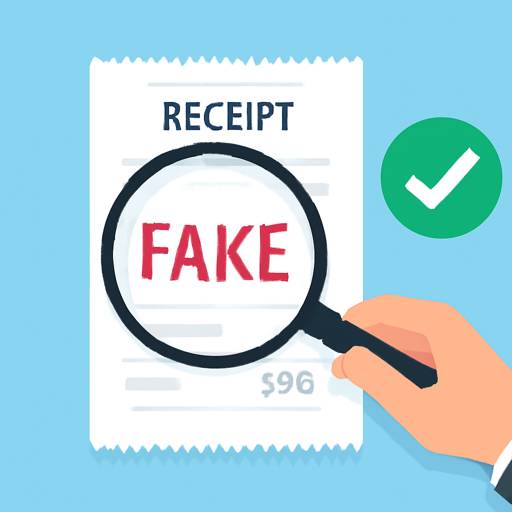
AI detection typically blends several techniques: convolutional neural networks analyze pixel patterns, transformer-based OCR models extract accurate text, and anomaly detection algorithms spot statistical deviations from a corpus of legitimate receipts. Networked checks—such as verifying vendor contact info, matching invoice numbers against merchant databases, or validating QR codes and barcodes—add external validation layers. For example, cross-referencing an invoice number with a vendor’s public API can immediately flag fabricated entries. Also, color profile analysis and font fingerprinting can reveal substituted typefaces.
Implementing confidence scoring helps prioritize manual reviews: the system should present a confidence score and explain which checks contributed most strongly to that score. When integrating third-party services, ensure encryption at rest and in transit, and preserve full traceability of every action. For users wanting to automate dispute handling or accounting reconciliation, a single integrated tool can both detect fake receipt and generate the forensic evidence necessary to support investigations or deny fraudulent claims.
Case studies and real-world examples: how detection prevents losses
Real-world cases underscore how layered detection prevents financial loss and reduces fraud exposure. In one corporate expense program, repeated submission of altered meal receipts was detected when the system flagged identical merchant logos with different font metrics and slightly altered totals. Anomaly detection surfaced that multiple receipts shared the same pixel-level noise pattern, indicating a reused template; automated blocking and a policy update reduced the company’s expense fraud by over 40% in six months. In insurance settings, a claims processor discovered that a set of receipts submitted for vehicle repair included scanned receipts with mismatched repair part numbers; cross-referencing vendor databases exposed the fabrication and prevented a large payout.
Small businesses also benefit. A retailer’s accounts payable team received an influx of vendor invoices with plausible formatting but impossible tax calculations. After deploying automated verification, the team uncovered a batch of PDFs that had been generated from screenshots and then re-saved with altered totals. The tool’s metadata analysis revealed creation times clustering outside business hours and identical editing software signatures across files—clear signs of coordinated fraud. Armed with the report, the company initiated stronger vendor onboarding and two-factor invoice submission requirements.
Prevention strategies drawn from these examples include: enforcing digital signature requirements, mandating submission from verified vendor portals, using automated OCR and cross-referencing with external vendor records, and keeping immutable audit trails. Training staff to interpret system reports and to follow escalation protocols for low-confidence results closes the loop between detection and action, turning technical signals into effective loss prevention.

Novgorod industrial designer living in Brisbane. Sveta explores biodegradable polymers, Aussie bush art, and Slavic sci-fi cinema. She 3-D prints coral-reef-safe dive gear and sketches busking musicians for warm-up drills.