Exposing Paper Lies: The New Frontier of Document Authentication
about : In a world where AI technology is reshaping how we interact, create, and secure data, the stakes for authenticity and trust have never been higher. With the advent of deep fakes and the ease of document manipulation, it’s crucial for businesses to partner with experts who understand not only how to detect these forgeries but also how to anticipate the evolving strategies of fraudsters. Document integrity is no longer an afterthought — it is a frontline defense in financial services, healthcare, government, and commerce.
How modern document fraud operates and why detection matters
Document fraud today spans a wide spectrum, from simple photocopy alterations to sophisticated synthetic identity schemes that combine real and fabricated elements. Criminals exploit gaps in verification processes by manipulating images, altering metadata, or fabricating entire records using machine learning and generative models. Common tactics include forged signatures, tampered PDFs, altered ID photos, doctored financial statements, and fully synthetic documents created to pass automated checks. These methods are often paired with social engineering to bypass human scrutiny.
The consequences are severe. Financial institutions face direct monetary loss and regulatory penalties when fraudulent loans or transactions slip through. Employers and landlords risk hiring or accepting identities that facilitate crime. Healthcare systems can be exposed to false insurance claims or fraudulent prescriptions, while governments encounter threats to national security and voting integrity. Beyond direct losses, organizations suffer reputational damage and erosion of customer trust — a cost that compounds over time.
Detection is critical because fraudsters continuously adapt; techniques that worked yesterday become obsolete as new tools and attack patterns emerge. Effective detection requires layered controls: robust document screening, metadata and provenance analysis, behavioral and biometric checks, and human review for ambiguous cases. Equally important is a threat-aware culture that treats authenticity verification as a strategic capability rather than a one-off compliance task. Investing in these defenses reduces exposure, speeds incident response, and preserves credibility with partners and regulators.
Technologies and techniques powering reliable detection
Modern document verification blends traditional forensic methods with advanced AI-driven analysis. Image forensics examine pixel-level inconsistencies, identifying signs of splicing, cloning, or content-aware fills. Optical character recognition (OCR) combined with semantic analysis extracts and validates textual content against expected formats, known reference databases, and pattern models. Metadata analysis reveals anomalies in creation timestamps, editing tools, and file history that often flag post-creation tampering. At a higher level, cross-referencing fields across documents and external authoritative sources uncovers contradictions that single-point checks miss.
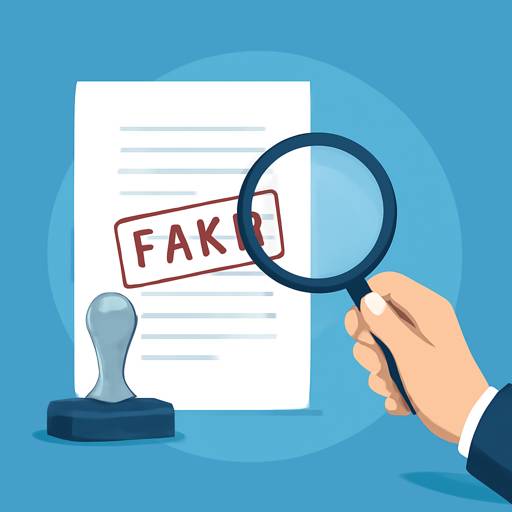
Machine learning models trained on large, labeled datasets detect subtle patterns of fabrication and can score risk in real time, while anomaly detection systems look for deviations from baseline behavior. Biometric and liveness checks — facial recognition paired with challenge-response protocols — add identity assurance beyond static images. Cryptographic approaches, such as digital signatures and blockchain anchoring, provide immutable provenance when documents are issued and recorded properly. Crucially, human expertise remains essential: analysts interpret ambiguous results, tune models, and respond to novel attack vectors.
For organizations seeking turnkey capabilities, adopting proven solutions is often more efficient than building in-house from scratch. Integrations that combine API-based screening, continuous model updates, and secure audit trails enable scalable defenses without sacrificing compliance. A single, carefully placed example of a well-integrated offering is visible in the way some vendors market their services — for instance, advanced document fraud detection platforms bring together the spectrum of checks into unified workflows that feed both automated and human-led review processes. Long-term efficacy depends on continuous testing, adversarial simulation, and partnerships with specialists who monitor emerging fraud trends.
Case studies and real-world lessons from frontline defenses
Case study 1: A regional bank began experiencing a spike in mortgage fraud where applicants submitted altered pay stubs and bank statements. By deployment of a layered screening system combining OCR validation, metadata forensics, and manual review for high-risk cases, the bank reduced accepted fraudulent applications dramatically. Key lessons included the importance of verifying document provenance and establishing rapid escalation channels to investigate suspicious anomalies.
Case study 2: A healthcare insurer faced organized rings submitting falsified provider credentials to bill for services. Implementing identity cross-referencing with national registries, automated credential verification, and periodic re-validation of enrolled providers closed the loophole. The insurer also instituted audit logging and chain-of-custody controls to preserve evidence for enforcement actions, demonstrating that technical controls paired with legal readiness deter repeat offenders.
Case study 3: A global employer used AI-based facial matching during onboarding but encountered spoofing attempts using high-resolution images and deepfake video. Augmenting the pipeline with active liveness tests and random challenge prompts, plus manual review for high-risk hires, restored confidence in verification outcomes. This example illustrates that continuous adversarial testing and multi-modal checks are indispensable to stay ahead of sophisticated attackers.
Across sectors, recurring best practices emerge: adopt multi-layered defenses, keep human oversight deeply integrated, and cultivate partnerships with firms that monitor and respond to evolving threats. Maintaining robust logging, secure storage of originals, and standardized incident response plans ensures that when fraud occurs, organizations can quickly contain damage, remediate processes, and pursue remediation or legal action. Investing in these capabilities transforms document verification from a point-in-time gate into an adaptable, defensive posture that scales as fraud techniques evolve.

Novgorod industrial designer living in Brisbane. Sveta explores biodegradable polymers, Aussie bush art, and Slavic sci-fi cinema. She 3-D prints coral-reef-safe dive gear and sketches busking musicians for warm-up drills.