Smart, Safe, and Fast: The Modern Truck Unloader Conveyor Explained
A truck unloader conveyor transforms the grind of manual floor-loaded unloading into a streamlined, data-friendly flow. By bringing a powered belt, roller, or telescopic boom directly to the vehicle, it shortens walk distances, reduces lift frequency, and accelerates every carton, tote, sack, or parcel from trailer to sortation. For high-volume operations in express delivery, warehousing, cross-border logistics, and mixed industrial receiving, this equipment is more than a dock accessory—it is a throughput engine. When traffic peaks, labor is tight, or dock doors are at a premium, the right conveyor reduces dwell time, protects workers, and ensures service-level promises are met without overstaffing. In a logistics landscape defined by speed, safety, and flexibility, getting the first 10 meters right makes all the difference.
What Is a Truck Unloader Conveyor and Why It Matters on the Dock
A truck unloader conveyor is a mobile or dock-mounted conveyor designed to enter or interface with trailers and containers so goods can be moved directly from the vehicle into a facility’s infeed and sorting systems. Instead of workers forming long human chains or stepping in and out of trailers with manual carts, the conveyor comes to the product, closing the gap between trailer floor and warehouse process. The result is a faster, safer, and more consistent intake—especially for floor-loaded shipments common in e-commerce and cross-border flows.
There are several primary styles. Telescopic belt conveyors feature extendable booms that can reach deep into 40-foot or 53-foot trailers, often with powered elevation to match different dock and vehicle heights. Flexible or accordion-style conveyors use gravity or motorized rollers to snake around tight spaces, providing a simple path from trailer to staging. Mobile belt or roller units on casters deliver fast setup for pop-up docks, small facilities, or multi-use bays that handle mixed freight. Each style supports a unique workload, but the shared goal is to move units quickly while improving ergonomics and reducing repetitive motion injuries.
Operational impact is immediate. By eliminating non-value-added travel and cutting the number of touchpoints, a facility can elevate cartons-per-labor-hour while reducing dwell charges and avoiding dock congestion. This is vital during peak season surges when inbound trailers queue and cycle times must shrink. For parcel hubs and omnichannel DCs, unloading becomes a predictable, meterable pace that aligns with sorter capacity. For manufacturers receiving parts or packaged goods, it translates into stable takt times for the next process. Even in environments handling soft-packed or irregular items, accessory modules—such as ergonomic lift-assists, bag flatteners, and cushioned side guides—help maintain flow and protect product.
Beyond speed, the equipment enforces process quality. With a controlled infeed, scanners and dimensioners can be positioned earlier, damage risk falls, and team leads can visualize flow in real time. When workers focus on positioning and quality checks rather than hauling heavy loads, retention improves and training time drops. In short, a truck unloader conveyor is a gateway to consistent intake—where every carton hits the belt at the right height, direction, and cadence.
Key Features, Specifications, and Options That Drive ROI
The ROI of a truck unloader conveyor hinges on the alignment of its features with your freight profile and dock layout. Core specifications include boom reach and belt width for telescopics; roller center spacing for small packages; height adjustment range to match regional vehicle standards; and frame robustness for heavy or abrasive loads. For cartonized freight, belts 600–800 mm wide with gentle inclines are common; for soft packs, low-friction covers and adjustable side guides help keep items centered and damage-free.
Controls and safety systems matter as much as mechanics. Variable frequency drives deliver smooth starts and stops; inching buttons or a joystick at the boom tip allow precise positioning; and “dead-man” controls ensure operators remain in control during motion. Photo-eye accumulation can maintain spacing to feed scanners and sorters downstream, while anti-collision sensors protect the boom and vehicle during extension. Emergency stops at multiple touchpoints, guarding at pinch zones, and high-visibility markings support safe operation at busy docks.
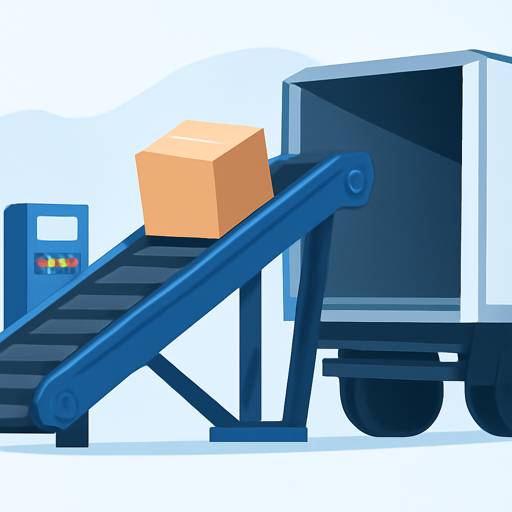
Operator comfort drives sustained productivity. Integrated LED task lighting improves visibility deep inside trailers. Ventilation fans reduce heat buildup. Quiet, energy-efficient motors limit fatigue over long shifts. Reversible belts aid in both unloading and loading, turning the same machine into a two-way asset for cross-docking and returns. Mobile bases add agility in facilities where dock assignments change rapidly, while dock-mounted units reduce setup time and deliver maximum rigidity for round-the-clock use.
Durability and serviceability complete the picture. Dust- and splash-resistant components extend life in humid or coastal climates. Toolless access panels accelerate routine checks. Belt tracking guides and robust return rollers cut unplanned downtime. Smart add-ons—like usage counters, motor temperature monitoring, and integration to WMS/WCS—enable predictive maintenance and flow orchestration. When evaluating vendors, look for modular designs that scale capacity and layout over time, plus support for compliance frameworks and regional electrical standards.
In practice, these features compress unload times, stabilize labor, and reduce ergonomic risk. A high-volume dock receiving floor-loaded parcels may cut trailer turns substantially by deploying two telescopic units with synchronized infeed lines. In a cross-border facility handling mixed cartons and polybags, flexible conveyors can orbit around obstacles to keep doors open and flowing during peak. To see representative configurations, explore the truck unloader conveyor families that combine telescopic booms, flexible roller lines, and mobile units tailored for express, warehousing, and industrial intake.
Deployment Scenarios, Safety, and Best Practices from High-Volume Operations
Every dock is different, so the best results come from mapping freight types, trailer mix, and downstream processes before configuration. In parcel hubs, telescopic belt conveyors with auto-levelling booms feed directly to automated sorters, with singulation zones and scanner tunnels placed strategically after the boom exit. For omnichannel DCs, a hybrid approach pairs a dock-mounted telescopic for deep reach with flexible motorized rollers for last-meter routing to put-walls, pallet build areas, or AS/RS infeed. In cross-border facilities where load consistency varies by carrier and route, mobile conveyors deliver the agility to reposition capacity by door, keeping dwell times predictable regardless of load profile.
Industrial receiving introduces its own nuances. For bagged materials, consider belts with textured, anti-slip surfaces and gentle inclines to prevent rollback. For heavy or abrasive goods, reinforced frames, larger roller diameters, and wear liners protect components. Environmental controls—like sealed bearings and corrosion-resistant finishes—are crucial in humid regions or near marine ports. Where cleanliness is critical, stainless options and easy-wash designs help maintain hygiene without extended downtime.
Safety practices elevate both uptime and morale. Standardize pre-shift checks for emergency stops, photo-eyes, lighting, and belt tracking. Train operators on safe entry/exit, boom positioning, and staying clear of pinch points. Use lockout/tagout for maintenance and enforce loading limits to protect the conveyor and workers. Clear floor markings and dock signage reduce confusion in mixed-traffic zones where forklifts, pallet jacks, and pedestrians converge. Thoughtful lighting and anti-slip matting at the trailer threshold reduce slips and trips, especially during night shifts or wet-weather operations.
Data integration closes the loop. By connecting the truck unloader conveyor to WMS/WCS, planners can gate inbound flow according to sorter availability and labor rosters, smoothing spikes during peak periods. Sensors that capture runtime, cycle counts, and alarm history support predictive maintenance—swapping a worn belt or roller before it causes a bottleneck. With standardized IO and fieldbus options, the unloader becomes a visible node in the facility’s control layer, enabling better scheduling, heat-mapping of congestion, and continuous improvement initiatives.
Finally, think in life-cycle terms. Choose a partner that brings strong R&D capability, local support, and the flexibility to customize booms, controls, and accessories for specific freight and space constraints. Commissioning support, operator training, and a stocked spare-parts program are the backbone of sustained performance. As order profiles evolve and volumes rise, modular extensions, upgraded drives, or added flexible sections let the system grow without reworking the dock. When the design aligns with the work, a well-specified truck unloader conveyor converts receiving from a hidden cost center into a dependable, scalable advantage across seasons and markets.

Novgorod industrial designer living in Brisbane. Sveta explores biodegradable polymers, Aussie bush art, and Slavic sci-fi cinema. She 3-D prints coral-reef-safe dive gear and sketches busking musicians for warm-up drills.